
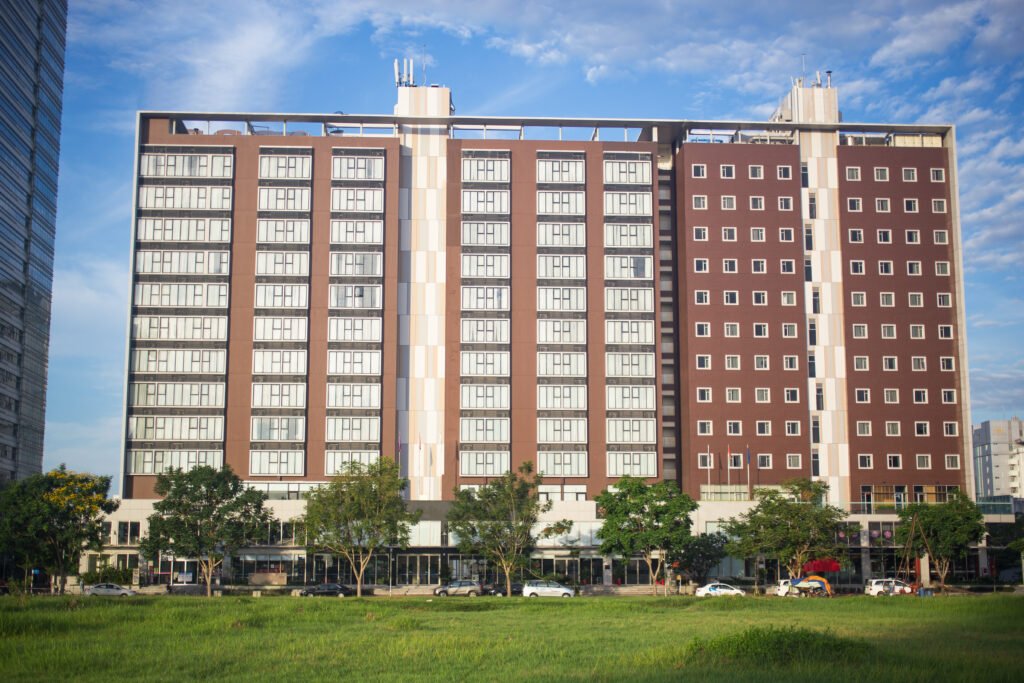
Commercial real estate relies on precision. Whether a building is office, industrial, retail, or mixed-use, accurate measurement directly impacts leasing, valuation, revenue, and long-term asset performance. When measurements are wrong, everything built on top of them from rental income to common-area maintenance, space planning, and renegotiations becomes compromised.
This is why BOMA measurement services have become the industry standard. They ensure buildings are measured correctly using globally recognized rules created by the Building Owners and Managers Association (BOMA). These standards provide consistent, transparent formulas for calculating usable area, rentable area, and load factors, which form the foundation of commercial leasing.
In this detailed guide, we explore what BOMA measurement services include, how the process works from start to finish, and why they matter for property managers, building owners, and leasing professionals.
Understanding the Purpose of BOMA Measurement Services
BOMA measurement services do far more than calculate square footage. They establish a clear, standardized framework for determining the true size and value of commercial spaces. Without these standards, landlords and tenants would rely on inconsistent or outdated measurements, which often leads to financial loss, disputes, or misrepresented leasing data.
The main purpose of BOMA measurement services is to ensure that a building’s areas are calculated in a way that is fair, accurate, repeatable, and compliant with modern commercial property guidelines. This includes evaluating all usable spaces, shared areas, and building elements that contribute to rentable square footage.
These services also provide official documentation — usually through CAD drawings, detailed reports, and certified area summaries — that building owners and facility managers can use for leasing, marketing, planning, and valuation.
What Do BOMA Measurement Services Include?
Professional BOMA measurement services offer a comprehensive approach to building measurement. While the exact deliverables may vary depending on the provider, there are core components that consistently form the backbone of the service.
These include a site survey, verification of existing layouts, precise area measurements, production of updated CAD drawings, application of BOMA standards, and delivery of a complete area calculation report.
Each component plays a critical role in ensuring accuracy and compliance. The objective is to create a documented, defensible, and industry-standard measurement that can stand up to audits, tenant scrutiny, valuation analysis, and market comparisons.
1. On-Site Building Survey & Assessment
The first stage of BOMA measurement services involves a thorough on-site assessment of the building. Technicians and survey specialists visit the property to take physical measurements and compare them with existing architectural drawings.
This step is essential because many buildings undergo renovations, tenant improvements, and layout changes over time. As a result, architectural plans are often outdated or incomplete. An accurate building survey allows the measurement team to establish a reliable baseline for further calculations.
2. Validation of Existing Building Layouts
After the initial field survey, the next step is to validate the building’s layout against available documentation. Most commercial buildings have historical drawings, CAD files, or blueprints, but they don’t always match real-world conditions.
Space validation involves analyzing discrepancies, correcting inconsistencies, and confirming dimensions. This is a crucial step because BOMA calculations are only as accurate as the floor plans used to determine them.
3. Creation or Updating of CAD Drawings
Once the physical measurements and validations are complete, the team creates updated CAD drawings or revises existing ones to show the true current layout of the building.
These CAD drawings form the foundation of BOMA calculations. They illustrate:
- suite boundaries
- shared corridors
- vertical penetrations
- restrooms and service areas
- building cores
- mechanical rooms
- common areas
By documenting these spaces accurately, the team can determine how areas should be categorized according to BOMA rules. Updated CAD drawings are also invaluable for space planning, leasing packages, renovation projects, and future assessments.
Many property managers use these files in their property management systems, allowing seamless integration with asset management workflows.
4. Application of BOMA Standards to Calculate Areas
Applying the BOMA standards is the heart of the measurement service. This is where specialists analyze the CAD drawings and measurements to determine usable area, rentable area, and the building load factor using the appropriate BOMA method.
Depending on the property type, different BOMA standards may be used, such as BOMA Office 2017, BOMA Industrial, BOMA Mixed-Use, or BOMA Retail.
The measurement team classifies spaces according to BOMA definitions and applies the correct formulas to calculate:
- usable areas for each tenant suite
- shared area allocations
- building common areas
- floor common areas
- amenity spaces
- vertical penetrations
- load factors
These calculations determine the total rentable area of the building and the rentable area of each tenant space.
This phase ensures compliance with industry expectations, prevents inflated or understated areas, and provides clarity for leasing negotiations.
5. Detailed Reporting of All Measurements
After calculations are complete, the team prepares a comprehensive BOMA report. This document is essential for facility managers, leasing teams, and building owners because it provides clear, certified documentation of the building’s measurements.
A standard BOMA report includes:
- total building rentable area
- rentable area per suite
- usable area per suite
- shared and common-area allocations
- load factors per suite and per floor
- floor-by-floor breakdowns
- updated CAD files
- outlines of measurement methods
- notes on assumptions and standards used
This report is designed to be easy for leasing agents, brokers, auditors, tenants, and valuation professionals to interpret.
6. Delivery of Official BOMA Certification or Compliance Confirmation
Many providers also include an official certificate or confirmation that the building has been measured according to BOMA standards. This document can be used in leasing negotiations, appraisal processes, refinancing, or investor presentations.
Certification adds credibility and ensures that the building has undergone a rigorous professional measureme
Why BOMA Measurement Services Matter for Commercial Properties
Accurate measurement is one of the most important operational elements in commercial real estate. Even small errors can have significant financial implications.
Financial Accuracy
Rentable area directly affects rental revenue, service charges, and recoveries. A building measured incorrectly could lose thousands of dollars in annual income or trigger disputes.
Transparent Leasing
Tenants expect transparency. BOMA standards eliminate ambiguity and provide a universal benchmark for measurement.
Operational Efficiency
Facility managers can plan renovations, tenant improvements, and space usage more effectively when they know the exact measurements.
Market Competitiveness
Buildings aligned with BOMA standards are more attractive to tenants and brokers because they provide clarity and consistency.
Conclusion
BOMA measurement services are a fundamental part of managing, leasing, and valuing commercial real estate with confidence and accuracy. By using a standardized, globally recognized method, these services eliminate inconsistencies and provide a clear, defensible understanding of a building’s true usable and rentable areas. For precise, compliant, and professionally verified BOMA measurements, contact us today and ensure your commercial property is represented with complete accuracy.
From on-site surveys and CAD updates to precise area calculations and certified reports, every stage of the BOMA measurement process helps property owners protect revenue, avoid disputes, and present their buildings with transparency and professionalism.
Frequently Asked Questions (FAQ)
1. What are BOMA measurement services?
They are professional building measurement services that calculate usable and rentable areas according to BOMA standards. They include surveys, CAD drawings, space validation, and official reports.
2. Why do commercial buildings need BOMA measurements?
They ensure accurate, transparent, and standardized measurements that protect rental revenue, simplify leasing, and improve valuation accuracy.
3. How often should a building be re-measured?
Most experts recommend remeasuring every 3–5 years or after major renovations, tenant improvements, or layout changes.
4. Do BOMA measurement services include CAD drawings?
Yes. Updated CAD drawings are a core part of the service because they are necessary for applying BOMA standards correctly.
5. What types of buildings can be measured using BOMA?
Office buildings, industrial spaces, retail properties, mixed-use buildings, and even some residential-commercial hybrids.
6. What is the value of BOMA certification?
It provides proof that measurements were performed using an industry-recognized standard, improving credibility and reducing the risk of disputes.